> ## Documentation Index
> Fetch the complete documentation index at: https://kb.verpex.com/llms.txt
> Use this file to discover all available pages before exploring further.
# Changing PHP Versions and Settings in Enhance
> Learn how to change the PHP version and customize php.ini settings for your website in the Enhance control panel.
## Changing the PHP version
To change the active PHP version, follow these steps:
1. Log in to your Enhance control panel.
2. In the left sidebar, click **Websites**:
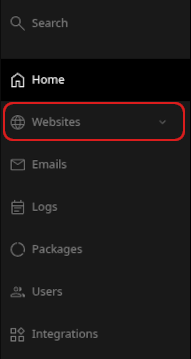
3. On the **Manage websites** page, click the website you want to manage.
4. A list of tabs appears at the top of the page. Click the **Advanced** tab, and then click **Developer tools**:
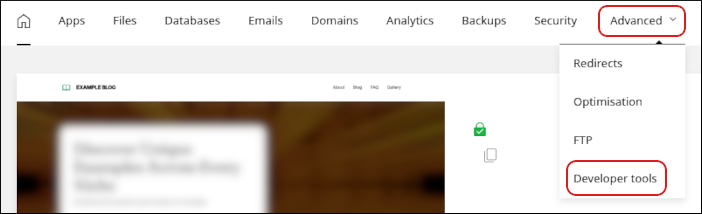
5. In the **PHP** section, in the **Version** list box, select the PHP version you want to use for your site:
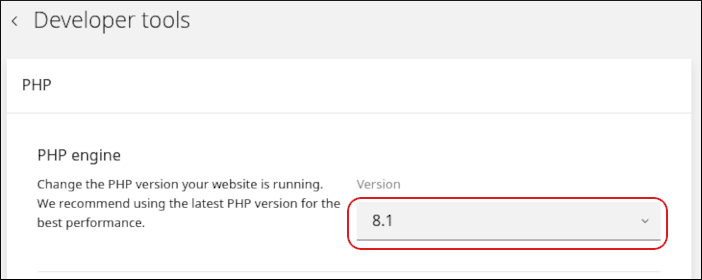
6. Click **Update**.
Make sure the new PHP version is compatible with any applications you are running. Otherwise, your website may not work correctly.
## Changing PHP settings
You can change php.ini directives to customize your PHP environment. To do this, follow these steps:
1. Log in to your Enhance control panel.
2. In the left sidebar, click **Websites**:

3. On the **Manage websites** page, click the website you want to manage.
4. A list of tabs appears at the top of the page. Click the **Advanced** tab, and then click **Developer tools**:

5. In the sidebar, click **php.ini editor**:
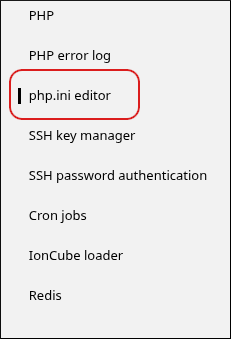
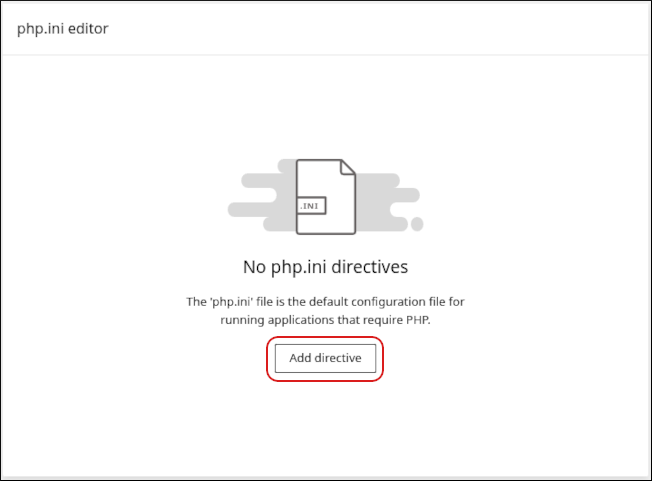
6. In the **php.ini editor** section, click **Add directive**:
7. In the **Directive** text box, type the name of the directive you want to configure:
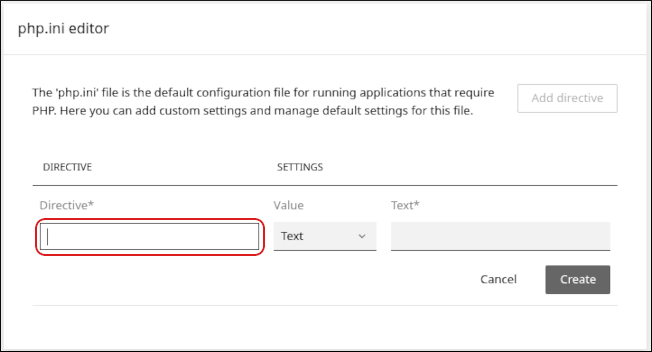
8. In the **Value** list box, select **Text** or **Boolean**:
1. For a text value, type the value in the **Text** text box.
2. For a boolean value, click **Enable** or **Disable**.
9. Click **Create**. The directive appears in the list of configured directives.
10. To make the new *php.ini* settings take effect, follow these steps:
* In the left sidebar, click **PHP**.
* In the **Restart PHP container** section, click **Restart**.
## Related articles
* [Managing your WordPress site in Enhance](/enhance/managing-your-wordpress-site-in-enhance)
* [Installing an SSL certificate in Enhance](/enhance/installing-an-ssl-certificate-in-enhance)
* [Managing your Domains in Enhance](/enhance/managing-your-domains-in-enhance)
* [Managing your Email in Enhance](/enhance/managing-your-email-in-enhance)
* [Using the File Manager in Enhance](/enhance/using-the-file-manager-in-enhance)
* [Managing Backups in Enhance](/enhance/managing-backups-in-enhance)
* [Managing your MySQL databases in Enhance](/enhance/managing-your-mysql-databases-in-enhance)
* [Managing FTP accounts in Enhance](/enhance/managing-ftp-accounts-in-enhance)
* [Configuring SSH access in Enhance](/enhance/configuring-ssh-access-in-enhance)